Do You Trust Others More Than Yourself?
By Dr. Margaret PaulOctober 26, 2020
Do you believe that others know better than you about what is right or wrong for you?
 "I think I should put the seed down in the pasture before the snowstorm," Erika said to me before we finally got snow.
"Maybe you should wait. We put it down last year before the first storm and then the snow melted and the geese ate all the seed."
Unfortunately, Erika listened to me. Then we got a big storm. Another is coming and it doesn't look like it is going to melt.
"I shouldn’t have listened to you," she said to me. "That's right – you shouldn't have! You should have listened to yourself!" We laughed.
I did the same thing – listened to her instead of myself. I had made a ceramic birdbath a number of years ago, and it was leaking. I had patched the leaks and I wanted to spray the bottom with a sealer. I needed to do it outside, and Erika said, "Just put it on the other side of the driveway on the pebbles. That way, the smell won't come into the house." A little voice inside me said, "That’s not a good place," but I ignored it.
Of course, I should have listened. Someone - either Erika or one of the people who help us - ran over my birdbath! Ouch!
I just finished making another one and it looks great, so all is fine, but we’ve both had a good laugh about what happens when we don't listen to ourselves.
I was not taught to listen to my own inner voice when I was growing up.
In fact, I was taught the opposite – that others knew more than me and that I should listen to them instead of to myself. Since I was also taught that it was bad to be wrong or make mistakes, it seemed easier to listen to others rather than myself and not run the risk of mistakes.
Fortunately, over the years of practicing Inner Bonding I've learned to listen – most of the time – to my inner voice. Obviously, I occasionally slip up and suffer the consequences, but I’ve learned to be ok with being wrong or making mistakes.
Who Do You Listen To - Yourself Or Others?
I think it's interesting that we often believe that others know better than we do about what is right for us. I'm certain that most of us learned this as we were growing up, when adults often did know more about things, but the fact that we continue this today needs attending to.
When I ask my clients why they don't listen to themselves or trust what they hear from their guidance, this is what they often say:
- I'm afraid of being wrong or making a mistake
- I'm afraid that I'm not really hearing my guidance
- I'm afraid the other person will get mad at me if I don't listen to them
- I don't want the responsibility of having to know what to do – it's too much responsibility
I've learned the hard way - with things like my birdbath – that when I ignore my guidance, bad things often happen. Certainly there are times when I’m wrong and make mistakes, even when I think I'm listening to my guidance – that's life. But I find that probably 95% of the time things turn out much better when I listen to myself. Far from feeling like too much responsibility, listening to and trusting my guidance feels to me like a much easier way to live. But I guess I still sometimes need reminders of this – and my birdbath was a good reminder!
Join Dr. Margaret Paul for her 30-Day at-home Course: "Love Yourself: An Inner Bonding Experience to Heal Anxiety, Depression, Shame, Addictions and Relationships."
 Attribution-NonCommercial-NoDerivs
CC BY-NC-ND
 Send this article to a friend
  Print this article
  Bookmarked 0 time(s)

 Share with Del.icio.us
 Share with Digg
 Share with StumbleUpon
| Related Articles |
|---|
Trusting your Guidance  |
Trusting Yourself  |
Comments
| Author | Comment | Date |
|---|---|---|
| Join the Inner Bonding Community to add your comment to articles and see the comments of others... | ||


Daily Inspiration
Spiritual growth is like the perennial flowers that emerge, bloom and die and then come back again next year, fuller and more beautiful. When we open to learning about loving ourselves and others, evolution and change will always occur, and the small deaths of our wounded self open the way to the emergence of the beauty and fullness of our true Selves.
By Dr. Margaret Paul
Inner Bonding Products:
| Image | Title | ||
|---|---|---|---|
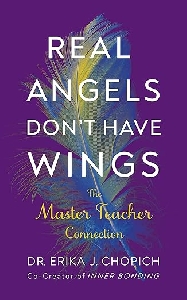 |
Real Angels Don't Have Wings: The Master Teacher Connection By Dr. Erika J. Chopich | ||
 |
#55 Managing Conflict By Dr. Margaret Paul | ||
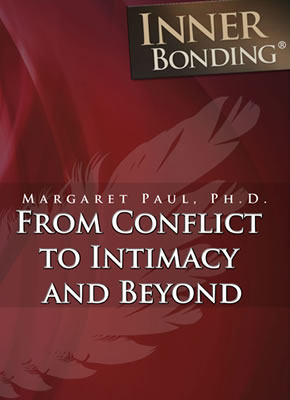 |
From Conflict to Intimacy and Beyond By Drs. Jordan and Margaret Paul | ||
 |
InnerBonding Gift Certificate | ||