You can not add video to this gallery!

Patience and Impatience
By Dr. Margaret PaulAugust 10, 2020
Do you get impatient? Would you like to become a more patient person?
 "Experiencing impatience is one of the first symptoms of not being in the present moment, not doing what you are doing, and not staying process-oriented."
~ The Practicing Mind, by Thomas M. Sterner
We all get impatient at times. Think about the last time you got impatient. What was going on? Were you focused on getting something done rather than being here in this present moment? Did you have an expectation that someone would do what you wanted them to do, and it wasn't happening? Were you judging yourself for not being organized enough? For losing your keys? For life happening as it happens?
When I'm impatient, it's generally because I don't want to accept my helplessness over a person or situation. Getting impatient is a form of control – a way to think we can get what we want rather than accept the reality of the situation.
How does it feel to you to get impatient? To me, it doesn’t feel good at all. I don't like the stressed, frustrated, irritated feelings in my body when I'm impatient, so most of the time I'm able to stay aware of what Thomas M. Sterner is saying in the above quote - staying in this present moment with the process, rather than focusing on the goal.
How do you feel about yourself when you get impatient?
The paradox for me is that, while I know that impatience is a form of trying to control external things, it makes me feel out of control of myself. I doubt that anyone ever feels good about themselves when they lose their patience. I certainly don't.
I used to be a very impatient person. I was so goal-oriented that as soon as things didn't go the way I'd planned, I would feel this irritation in my body and express it with impatience. Of course, no one likes to be at the other end of someone's impatience, so often it would create repercussions that led to even more frustration. Not a winning scenario!
I still sometimes get that irritated feeling in my body, but now I'm not so quick to act it out. I know that the feeling is letting me know there is some way I'm not taking care of myself, some way I'm abandoning myself. So instead of going outward, I go inward to attend to what I need to attend to. The outcome of this is generally much better!
Impatience can also be triggered due to physical reasons.
If I don't get enough sleep, or enough exercise, or enough down time to regenerate, or if I have not nourished my body properly, I feel much more reactive than if I'm rested, exercised, nourished and rejuvenated. Since I work long hours at an intense pace, I need to make sure I take care of myself regarding sleep, exercise, food, time alone, creative time and play time with others.
Something that is important to understand about yourself is how you regenerate. Do you need time alone to regenerate, or do you regenerate best around others - or do you need both? Those of us who are introverts – as I am – often need some time alone to regenerate. Those of us who are extroverts often need to be around others to regenerate. And many of us need both - alone time and time with others. So, we each need to find the balance that creates a sense of internal peace and fulfillment.
If being a patient person is important to you, then you might want to learn about what may be creating impatience and what would enable you to be more patient.
Join Dr. Margaret Paul for her 30-Day at-home Course: "Love Yourself: An Inner Bonding Experience to Heal Anxiety, Depression, Shame, Addictions and Relationships."
 Attribution-NonCommercial-NoDerivs
CC BY-NC-ND
 Send this article to a friend
  Print this article
  Bookmarked 0 time(s)

 Share with Del.icio.us
 Share with Digg
 Share with StumbleUpon
| Related Articles |
|---|
Controlling Behavior - How Do You Attempt to Control?  |
| Accepting What You Can't Control, Controlling What You Can |
Comments
| Author | Comment | Date |
|---|---|---|
| Join the Inner Bonding Community to add your comment to articles and see the comments of others... | ||


Daily Inspiration
Today, allow joy to be your guide. Think thoughts that create inner joy. Take actions that create joy. Spirit has given us the experience of joy to let us know when we are on track with our beliefs, thoughts, and actions. Joy is Spirit's way of communicating to us that we are thinking and behaving in true and loving ways.
By Dr. Margaret Paul
Inner Bonding Products:
| Image | Title | ||
|---|---|---|---|
 |
6 Steps to Total Self-Healing By Dr. Margaret Paul | ||
 |
Food and Sex Addiction By Dr. Margaret Paul | ||
 |
From Conflict to Intimacy and Beyond By Drs. Jordan and Margaret Paul | ||
 |
Beloved Companionship - An Alternative To Loneliness By By Margaret Paul, Ph.D. | ||
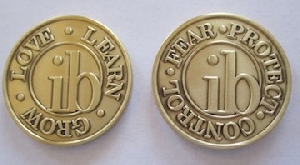 |
Inner Bonding Coin By Dr. Margret Paul | ||