Deeper Into Step One of Inner Bonding
By Dr. Margaret PaulAugust 31, 2020
You can't do Inner Bonding without being present in Step One.
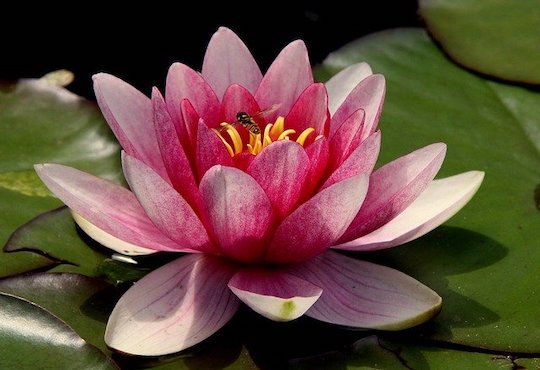 "Once we’re willing to confront our emotional suffering, we begin making choices based on attraction instead of aversion, love instead of fear. Where we used to think about what was “safe,” we now become interested in doing what seems right or fun or meaningful or ripe with possibilities." --Martha Beck, The Willingness Factor
Step One of Inner Bonding: The willingness to feel your feelings and want responsibility for them.
When I started to practice Inner Bonding, it took me two years of practice to be continually present in my body, tuned in to my feelings, and to want responsibility for them.
Without being present in your body and being willing to take responsibility for your feelings, you can't move ahead with the other Steps of Inner Bonding. Yet many people seem to skip a vital part of Step One – the willingness to take responsibility for their feelings.
Why Is This Challenging For So Many People?
What I hear often from my clients is:
"It's too hard."
"I can't do it – I don't know how."
"What's the point? Taking loving care of myself doesn't feel nearly as good as being loved by someone else."
If you hear yourself saying things like this, it's vitally important to recognize that these are false beliefs of the wounded self. While these statements are true for the wounded self, they are not at all true for the loving adult.
It's not that it's too hard for the wounded self or that the wounded self doesn't know how – it's that it's impossible for the wounded self to do it. Since our wounded self has no access to the love and wisdom of our guidance, our wounded self is not capable of taking responsibility for our feelings. And when the wounded self tries to do it, it won't feel very good because it will be about control rather than about love. Step One is not the job of the wounded self.
Step One is the Job of the Loving Adult.
The willingness to take responsibility for our feelings means the willingness to learn with our guidance so that we can access love and the wisdom to take loving action. We cannot fully feel our painful feelings and learn to take responsibility for them without a strong connection with our spiritual guidance. Only our loving adult has the capacity to want and take this responsibility.
I learned to do this by committing myself to remembering to check in with my feelings and with my guidance. It took much practice, and eventually it became my way of being in the world.
Remembering that all feelings are informational helped me become motivated to stay connected with myself.
Since I spent my whole life, before Inner Bonding, dedicated to avoiding my feelings, it was quite a challenge to be present with them and want responsibility for them. Like Martha Beck says in the above quote. I wanted to be able to make choices from love rather than from fear – choices that seemed "…right or fun or meaningful or ripe with possibilities." Trying to control feeling safe had done nothing but create anxiety for me. I eventually let go of trying to have control over safety and became a risk-taker. My loving adult was emerging.
Ironically, the more I practiced staying present for my feelings and connecting with my guidance, the safer I felt. And it wasn't until I had been practicing Inner Bonding for a few years that I felt true deep joy for the first time in my life.
Now, due to the years of practice, I'm instantly aware the moment I feel something other than peace and joy within. I quickly notice if I've allowed my wounded self to think an untrue thought, or if something external is occurring that I need to attend to. I put my hand on my heart and compassionately embrace all feelings with an intention to learn – truly wanting responsibility for them, because I know from years of experience that this is the path to joy.
Join Dr. Margaret Paul for her 30-Day at-home Course: "Love Yourself: An Inner Bonding Experience to Heal Anxiety, Depression, Shame, Addictions and Relationships."
 Attribution-NonCommercial-NoDerivs
CC BY-NC-ND
 Send this article to a friend
  Print this article
  Bookmarked 0 time(s)

 Share with Del.icio.us
 Share with Digg
 Share with StumbleUpon
Comments
| Author | Comment | Date |
|---|---|---|
| Join the Inner Bonding Community to add your comment to articles and see the comments of others... | ||


Daily Inspiration
The highest experience in life is to share a circle of love. A circle of love occurs when your heart is open with another whose heart is also open. A circle of love replenishes the soul. Today, create a circle of love with Spirit, nature, animals and with people who are available to sharing love with you.
By Dr. Margaret Paul
Inner Bonding Products:
| Image | Title | ||
|---|---|---|---|
 |
Resistance to Loving Yourself By Dr. Margaret Paul | ||
 |
#56 Connection With Self and Others By Dr. Margaret Paul | ||
 |
The Inner Bonding Meditation - Audio By Dr. Margaret Paul | ||
| no image for this product | COMPLETE SELF-LOVE - The Ultimate Collection | ||
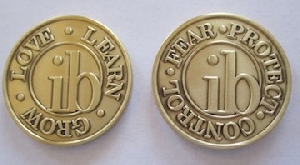 |
Inner Bonding Coin By Dr. Margret Paul | ||